
Precision Heat Pump Installation Across Kent.
Upgrade your home from expensive oil, LPG or gas with £7,500 non-repayable BUS grant funding. Enjoy continuous low-carbon warmth and lower running costs.
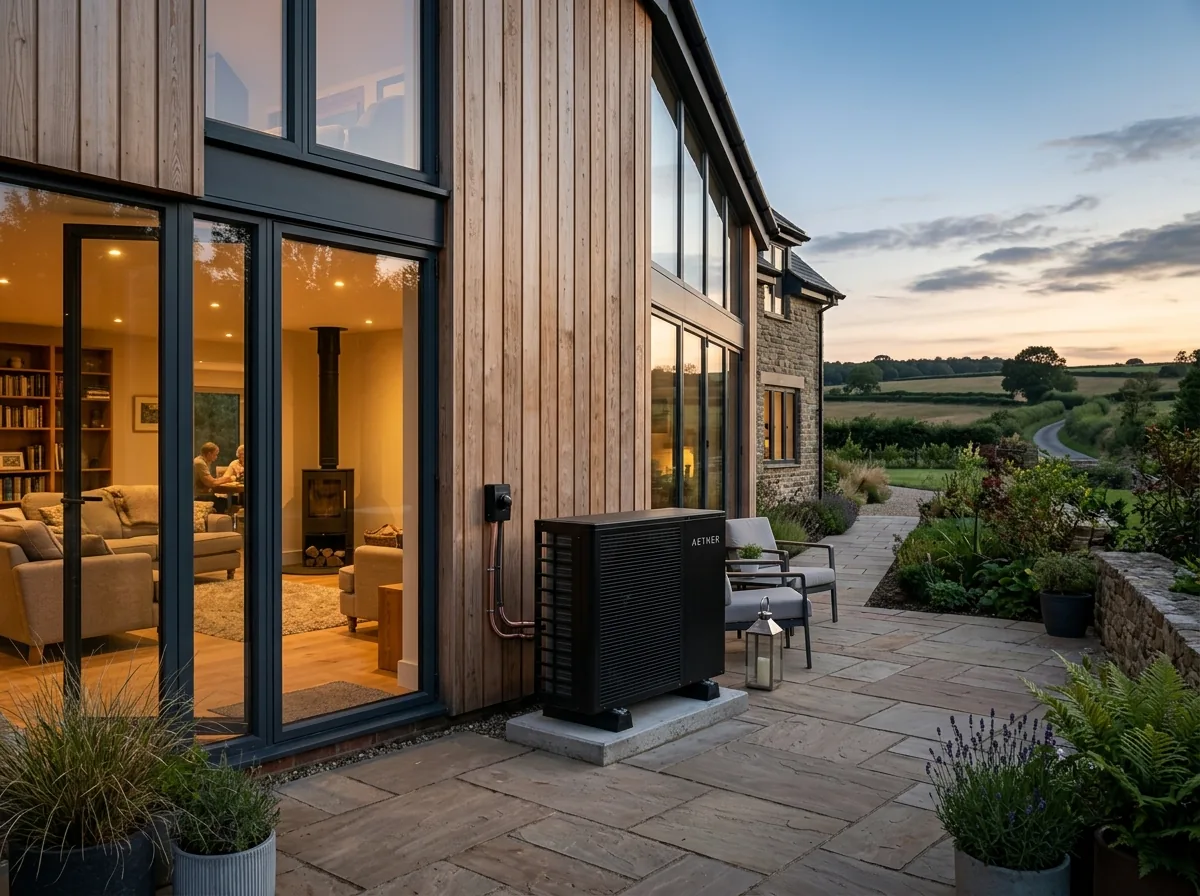
Technical Excellence & Specifications
Every CPSL installation conforms to rigorous Microgeneration Certification Scheme standards and precision heat loss modelling.
350% – 450% SCOP
Yields 3.5 to 4.5 units of heat energy for every single unit of electricity consumed.
Ultra-Quiet 35–38 dB(A)
Quieter than a modern domestic refrigerator with specialized anti-vibration rubber footings.
Weather Compensation
Automated curve profiling continuously modulates water flow temperature to ambient weather.
£7,500 BUS Grant
Deducted immediately at invoice point. CPSL Kent handles 100% of Ofgem paperwork.
Architectural Heat Pump Engineering Designed for Kent Architecture
From Victorian solid-brick villas in Tunbridge Wells to 1970s suburban homes in Maidstone and modern barn conversions in the Kent Weald, no two heating systems are identical. Heat pump performance relies fundamentally on correct hydraulic design, precise emitter sizing, and exact room-by-room heat loss calculations under BS EN 12831.
settings_suggest Key System Engineering Standards We Guarantee:
- verifiedComprehensive room-by-room heat loss calculations with thermal laser measurements, never rule-of-thumb cubic sizing.
- verifiedHydraulic separation using low-loss headers or volumiser buffer tanks to ensure uninterrupted minimum flow rates during defrost cycles.
- verifiedOxygen-barrier PEX and copper pipework insulated with Class O Armaflex to eliminate external thermal loss.
- verifiedMCS Certificate of Compliance issued within 5 working days of commissioning, unlocking 10-year manufacturer warranties.
Every CPSL Kent system is commissioned with precision flow balancing across all radiators or underfloor heating loops. This guarantees steady, even warmth in deep winter without hot or cold spots.
Get a Guaranteed Fixed-Price Quote
Schedule your room-by-room heat loss survey or request a transparent, fixed-price heat pump proposal. Our Maidstone engineers will verify your property eligibility in 24 hours.
Real Kent Home Transformations
See verified efficiency upgrades across Maidstone, Tunbridge Wells, and Ashford with our MCS-certified installations.
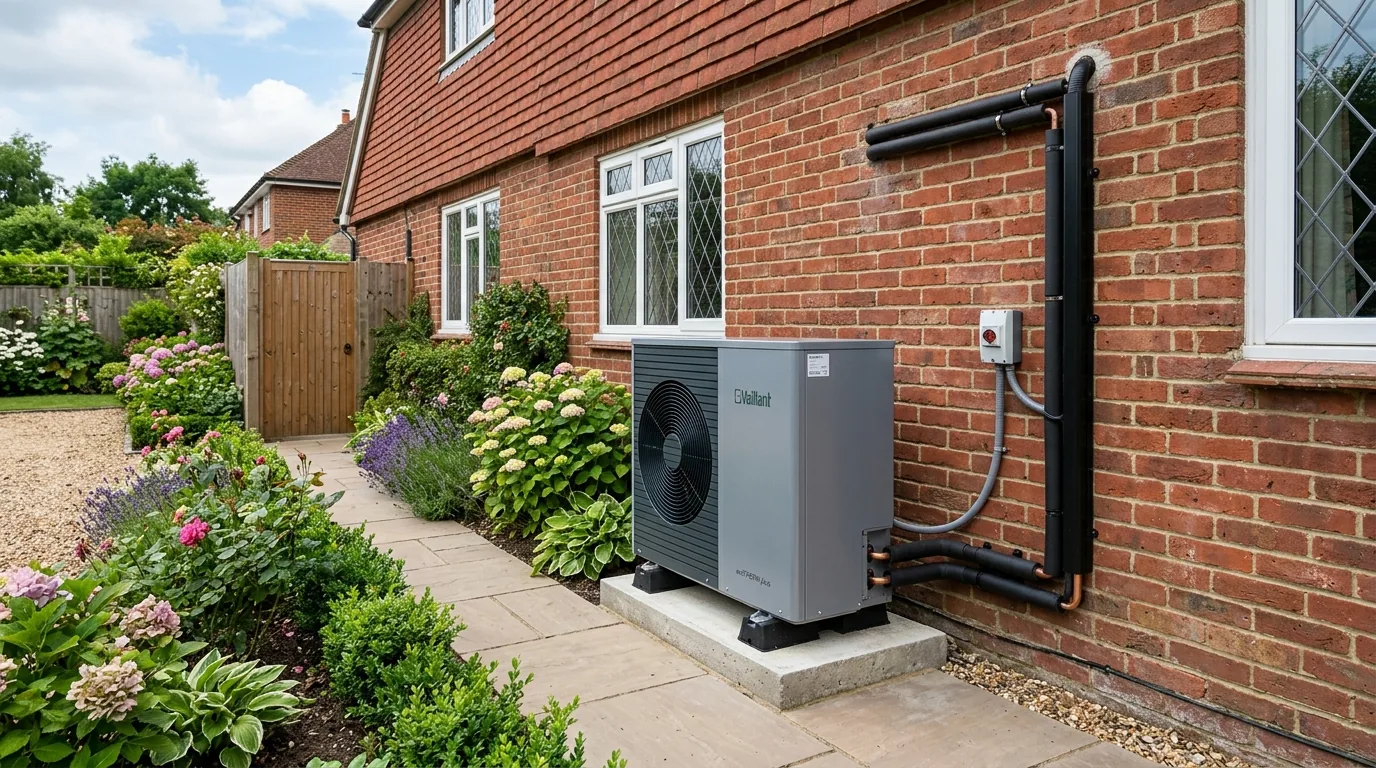
Oil Boiler to Daikin Altherma 3 (11kW)
Replaced a 19-year-old oil boiler. Integrated low-temperature double-panel radiators with weather compensation. Homeowner cut annual heating spend by 44%.
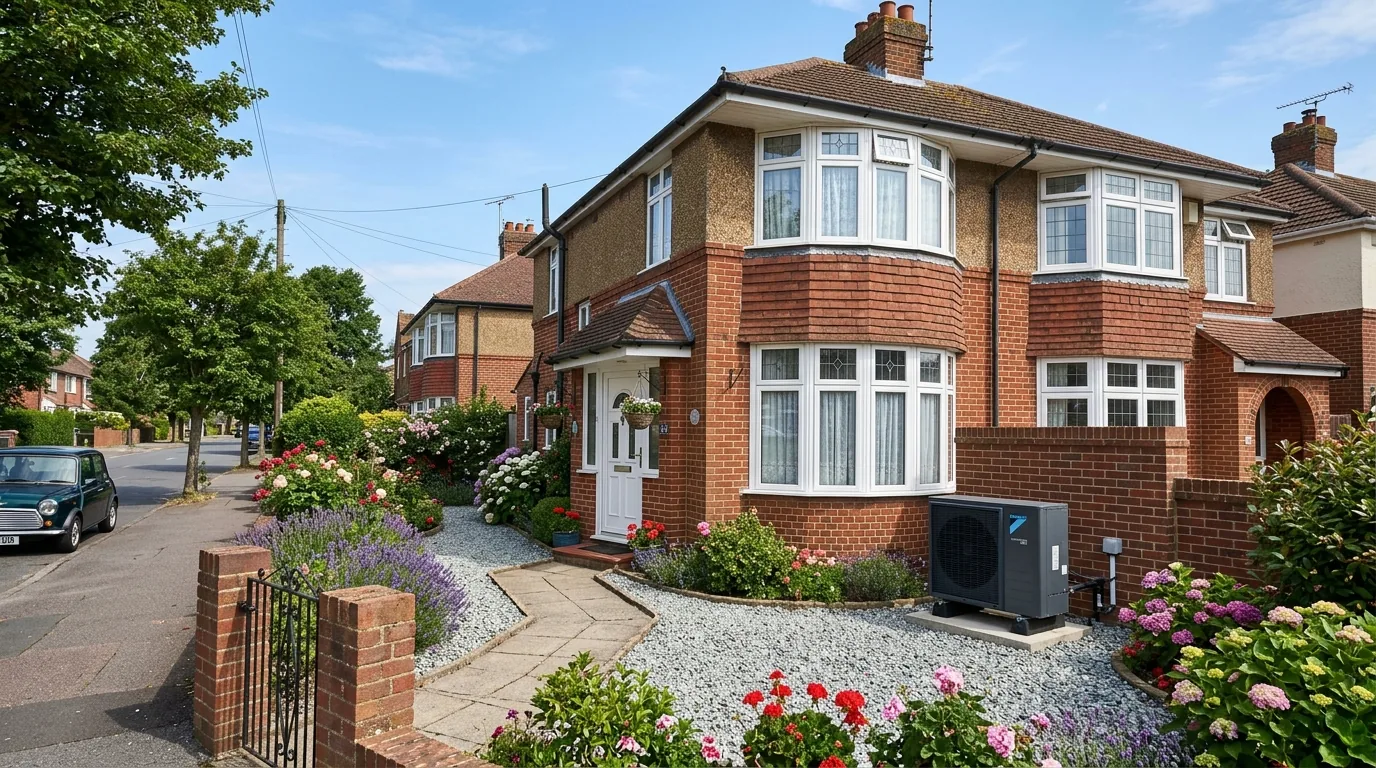
Gas Combi to Mitsubishi Ecodan (8.5kW)
Coupled with a 210L unvented hot water cylinder. Zero disruption installation completed in 2.5 days. SCOP achieved: 3.92 over winter.
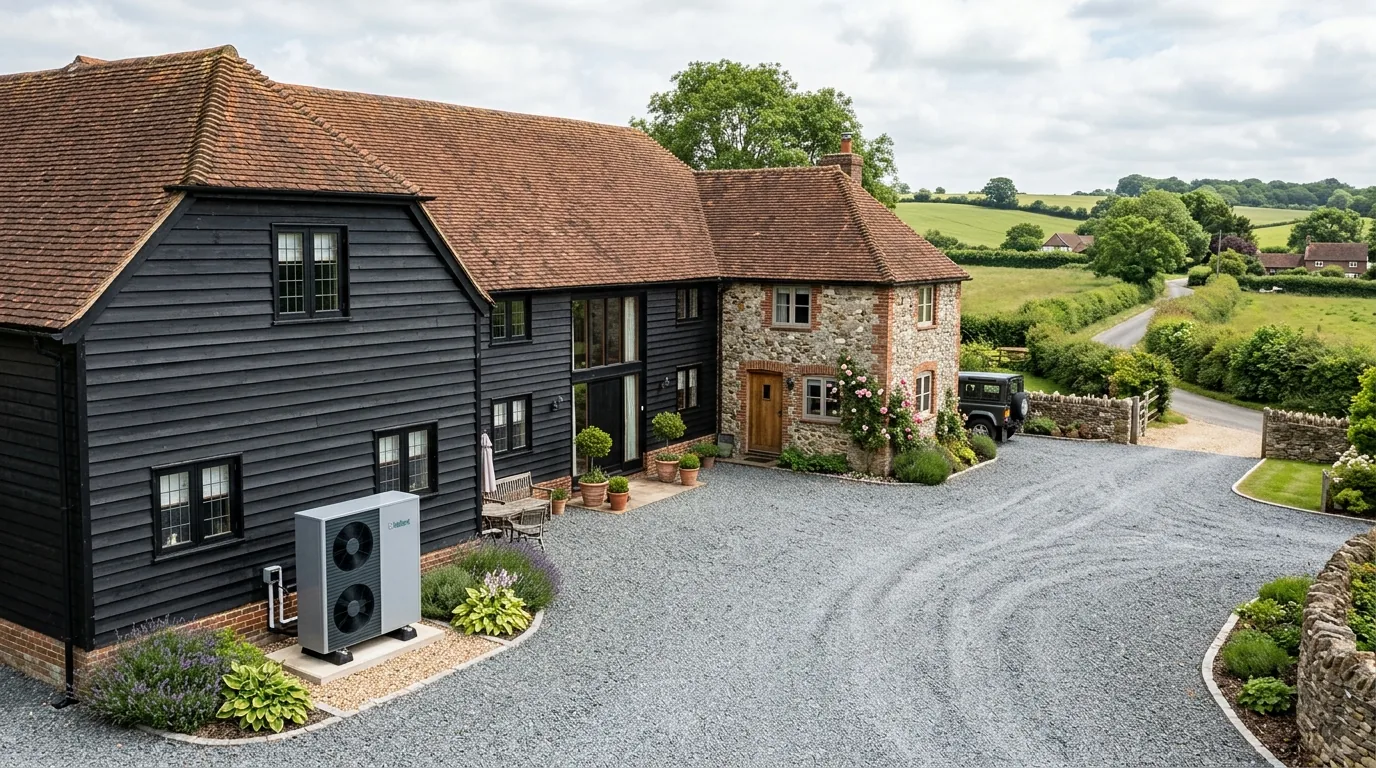
LPG Tank to Vaillant aroTHERM plus
Eliminated expensive tanker deliveries. High-temp R290 natural refrigerant heating water to 65°C without electric backup immersion.
Our 4-Step Turnkey Process
From initial heat loss physics to final Ofgem £7,500 grant redemption, we manage every phase with zero subcontracted shortcuts.
Desktop & EPC Analysis
We review your EPC, property thermal envelope, and orientation to confirm suitability and verify £7,500 BUS grant eligibility upfront.
100% Free & No ObligationRoom-by-Room Heat Loss
A certified CPSL heating engineer visits your Kent property with laser measuring tools to calculate exact watt losses per room per BS EN 12831.
Fixed-Price ProposalClean 2-3 Day Install
Our in-house tidy installation team lays protective sheeting, removes redundant equipment, and installs acoustic vibration mounts with zero mess.
Zero Mess GuaranteeHandover & 10-Yr Care
We commission weather compensation, configure your smartphone app, redeem the £7,500 grant on your behalf, and activate your 10-year warranty.
Lifetime Local SupportFrequently Asked Questions
Everything you need to know about engineering standards, grants, and living with renewable systems in Kent.
help Do heat pumps work during freezing Kent winter temperatures?
Yes. Our Daikin, Mitsubishi, and Vaillant heat pumps are engineered to deliver 100% full heating capacity at external ambient temperatures down to -15°C and continue operating reliably down to -25°C.
help Will I have to replace all my existing radiators?
Not necessarily. During our comprehensive heat loss survey, we assess every radiator. Frequently, existing double-panel radiators are already adequately sized, or only 2 to 4 key emitters in high-heat-loss rooms need upgrading.
help How does the £7,500 Boiler Upgrade Scheme (BUS) grant work?
The £7,500 is a non-repayable government grant. As an MCS-certified installer, CPSL Kent submits the application directly to Ofgem and discounts the full £7,500 directly from your quotation and invoice.
help How long does installation take and will I be left without hot water?
A typical residential heat pump installation takes 2 to 3 days. We ensure your hot water and heating are only offline for a single working day during the final changeover.
Ready for Guaranteed Winter Warmth and Lower Energy Bills?
Secure your £7,500 non-repayable government grant and schedule a fixed-price quote. Our Maidstone-based team will confirm your property eligibility in under 2 minutes.